A homeowner in a split-level called me out for a smell she couldn't name. The hallway smelled cold, she said, like the air near a swimming pool, and she apologized twice for how odd that sounded. Nothing odd about it. She was standing eight feet from a receptacle that had been arcing quietly behind the drywall for weeks, and her nose flagged it before anything visible went wrong. Ask what does ozone smell like and cold keeps surfacing in the answers, which is strange once you stop on it, because a trace gas sitting at room temperature carries no temperature your nose can read. That word is still doing real work. Outdoors after a storm it means nothing at all. Six inches from an outlet, it can be the only warning you get.
TL;DR Quick Answers
What does ozone smell like?
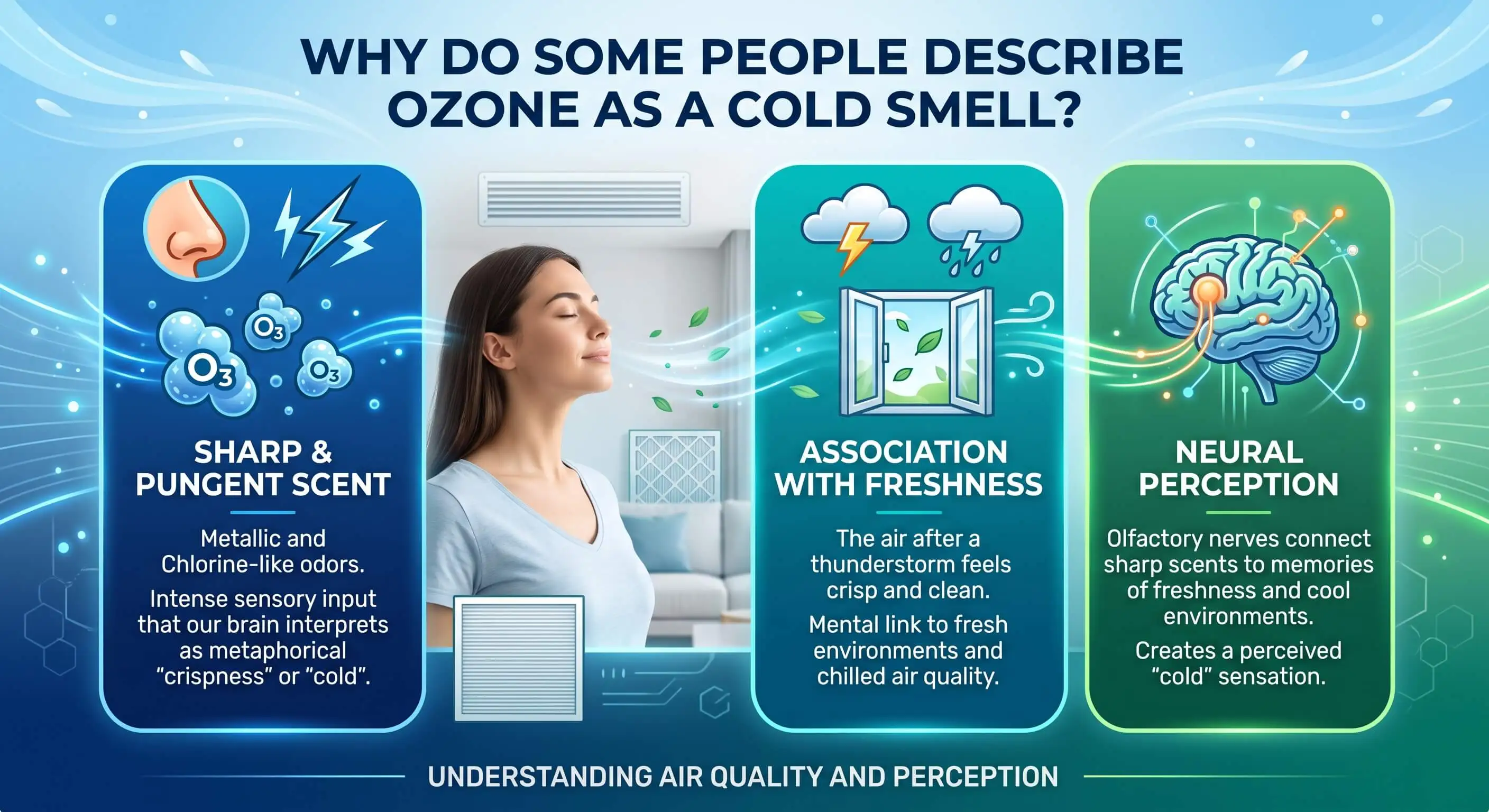
Ozone smells sharp and pungent, closest to chlorine or bleach, with a thin metallic edge behind it. Most people also call it electric or crisp, like the air just before a thunderstorm breaks. It carries no actual temperature, though cold is the word people reach for most often.
Closest comparison: chlorine or bleach, like walking into an indoor pool
Secondary notes: metallic, electric, crisp
Outdoors: the sharp note before and during lightning, not the earthy smell after rain
Indoors: near outlets and wiring, ionizers and ozone generators, or a UV lamp in the air handler
Worth knowing: ozone dulls your sense of smell, so a fading smell doesn't prove the gas left
Top Takeaways
Ozone smells sharp, pungent, and chlorine-like with a metallic edge behind it, and it carries no actual temperature.
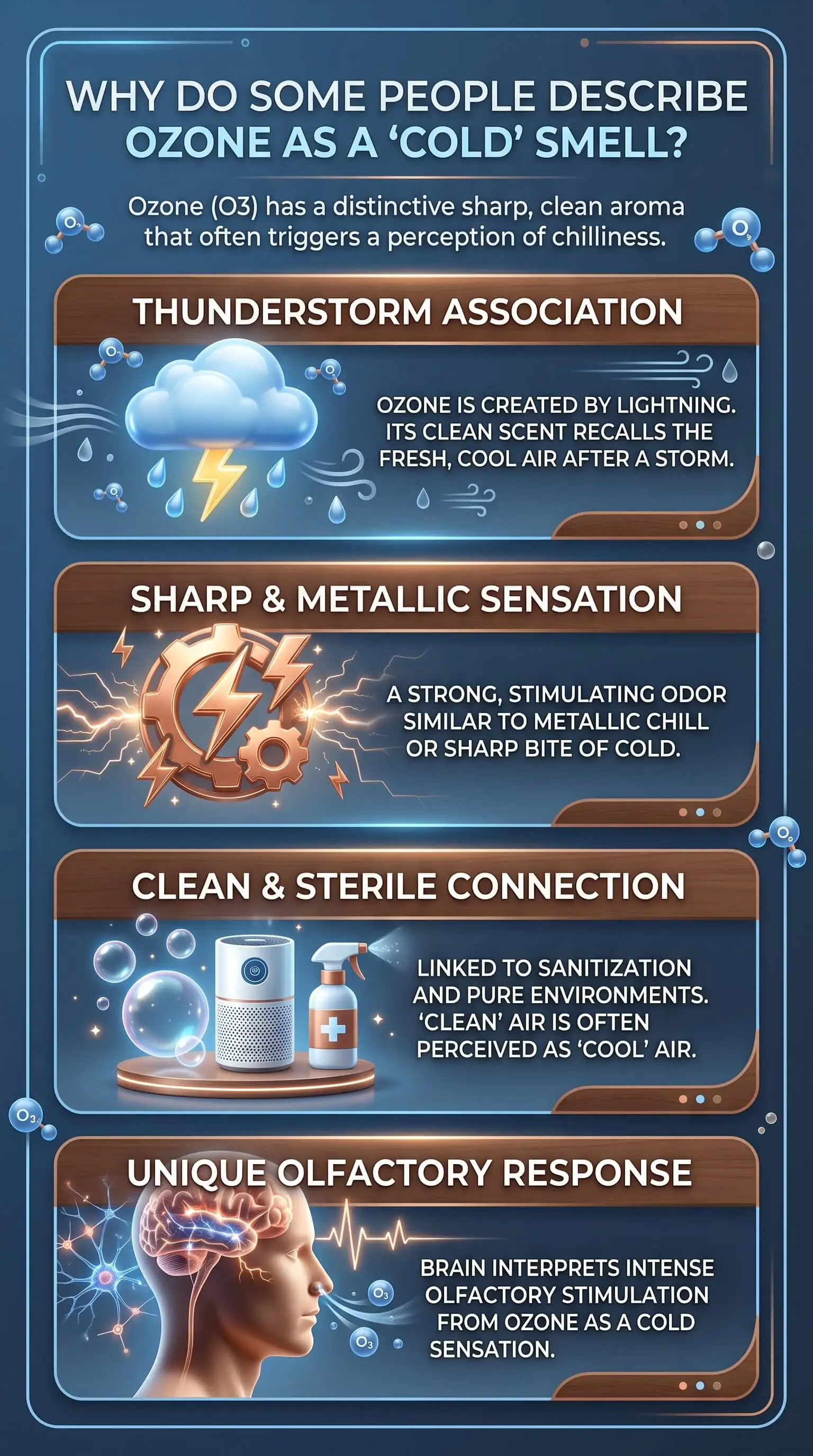
Cold comes from your nose's irritation channel, which shares wiring with your temperature sense. Menthol works the same trick in reverse.
Cold places taught you the association: storm downdrafts, walk-in coolers, pool halls, electrical rooms.
This smell near wiring, outlets, or appliances points to arcing. Cut power to that circuit and call a licensed electrician.
The earthy smell after rain is petrichor from soil bacteria. Ozone is the sharp note during the storm, not after it.
Why Cold Is the Word People Reach For
The smell is sharp, and it isn't cool at all
Ozone is oxygen wearing a third atom. Chemists call it trioxygen. That extra atom won't sit still, so the molecule reacts with nearly anything it touches, and what lands in your nose comes across sharp and pungent, closest to chlorine bleach with a thin metallic edge behind it. Anybody who has walked past an indoor pool already knows it. Cool has nothing to do with any of this. Set a thermometer beside a running ozone generator and the air reads the same as the rest of the room.
I have smelled it strongest at an electrical panel with a loose lug, and once in a hallway where a homeowner had left a bargain ionizer running for two days with every window shut. Older blower motors with worn brushes throw it off too. Keeping top air filters in your HVAC system helps maintain cleaner indoor air, making unusual odors like ozone easier to notice and investigate.
Your nose runs a second channel, and that channel borrows temperature words
Smell isn't the only sense working in there. The trigeminal nerve carries irritation out of the same tissue, and strong oxidizers set it off right alongside your odor receptors, which is why a lungful of ozone feels like something instead of only smelling like something (PubMed).
Here's the part that explains the word. Receptors reporting chemical irritation overlap with the ones reporting temperature, and that overlap is why menthol feels cool without cooling anything and why chili heat burns with no heat present (National Institutes of Health). Run a chemical signal through temperature hardware and temperature words come back out. Cold is what people reach for when a sensation feels thin and stinging. Ozone lands exactly there.
Cold rooms taught you the rest
Almost every place you learn this smell happens to be cold. A thunderstorm shoves a cold downdraft out ahead of itself while the lightning inside it manufactures ozone in the channel it burns through the air, so the smell and the temperature drop show up together, over and over, for a lifetime. Then the walk-in cooler at the grocery store does it again. So does the tiled air around an indoor pool, the electrical room in an old building, and that first January morning when the furnace finally fires. Your brain files the smell with the setting and never goes back to pull them apart.
What I do when I smell it inside a house
Near an outlet, switch, panel, or appliance, especially with a buzz or a warm cover plate. I treat it as arcing and stop working. Power off at the breaker, then a licensed electrician. This is the version that can't wait for next week.
Right after an air purifier, ionizer, or ozone generator runs. The device is making it. Shut it down while people and pets are home, then open the windows.
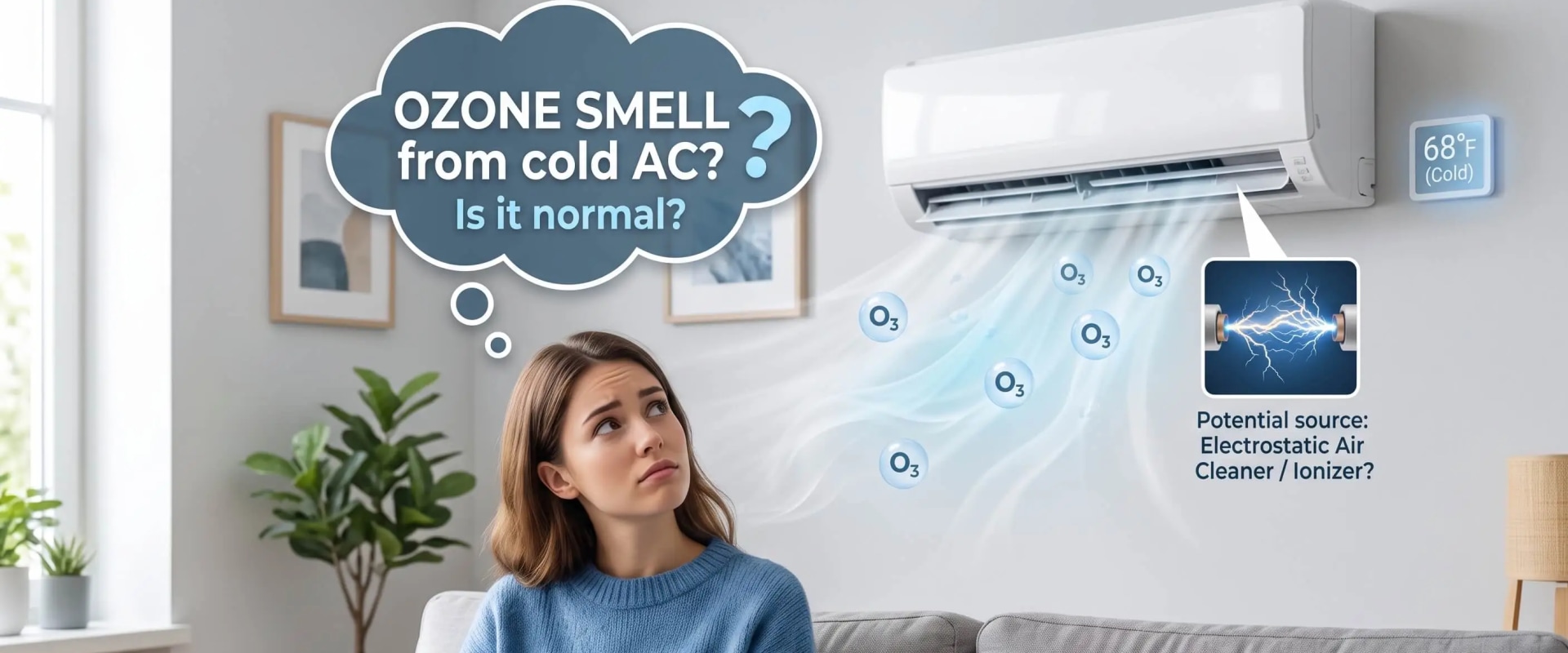
When the air handler starts. A UV lamp inside the system can make ozone while it runs, and an electrical fault in the equipment can do it too. Either one earns a look.
Hot afternoon with the windows open. Outdoor ozone rode in on the breeze. Close the house through peak heat, then check your local forecast before you air it out again.
A laser printer in a small closed room. Improve the ventilation and move the machine somewhere with air movement.
Every one of those sources behaves differently and asks for a different response from you. This breakdown of what ozone smells like indoors walks through each one, including how long the smell hangs around once you've killed the source, along with practical ways to improve the air quality and stop smell problems.
That earthy smell after rain is a different smell
Most people have this one backwards, so it's worth straightening out. The earthy smell rising after a rain is petrichor, and it comes mostly from geosmin, a compound soil bacteria produce that raindrops kick up into the air. Ozone is the sharp electric note you catch before and during the storm, while the lightning is still working. One weather event, two different smells—and neither should be confused with the damp, stale odor when your AC smells musty.
“The homeowners who call me quickly are the ones who trust the smell instead of talking themselves out of it. A sharp, cold smell at a panel has never once turned out to be nothing on my calls.”
7 Essential Resources
Read what regulators say before you trust an ozone device
The EPA went through the peer-reviewed literature on ozone-producing air cleaners and found the marketing claims don't hold up. Worth reading before anybody in your house buys one. epa.gov
See the exposure limit your nose has already passed
Federal workplace limits show how small a concentration counts as too much, which puts that smell in your hallway in perspective fast. osha.gov
Find out who in your household reacts first
Kids, older adults, and anyone with asthma or COPD feel ozone at lower levels than everybody else. Read it if that describes someone at your address. lung.org
Understand the storm chemistry behind the outdoor version
How lightning forms and what it does to the air it tears through, straight from the federal lab that studies severe storms. nssl.noaa.gov
Check your home's electrical risk before the smell shows up
Practical home electrical safety guidance covering wiring, outlets, and the warning signs that arrive ahead of a fire. nfpa.org
Know whether today's outdoor ozone is coming inside
A plain-language guide to ozone levels and what to do at each one, including when to leave the windows shut. airnow.gov
Learn the warning signs that travel with this smell
A short federal safety sheet listing what shows up alongside an overheating circuit: buzzing sounds, hot cover plates, flickering lights. Print it and tape it inside the panel door. cpsc.gov
These trusted resources explain how to identify ozone safely, recognize potential electrical and indoor air quality hazards, and understand how a clean MERV 8 pleated HVAC air filter supports healthier airflow while you track down the true source of unusual odors.
3 Statistics
The California Air Resources Board puts the detection threshold for some people as low as 0.05 parts per million, and the same fact sheet warns that ozone deadens the sense of smell, so a fading smell proves nothing about whether the ozone left. ww2.arb.ca.gov
NIOSH sets its recommended exposure ceiling for ozone at 0.1 parts per million and classifies 5 parts per million as immediately dangerous to life or health. cdc.gov
The Electrical Safety Foundation International counts more than 30,000 home fires a year started by arcing faults, along with more than $750 million in property damage. esfi.org
These statistics show why ozone should be taken seriously. Whether the solution is correcting an electrical fault or considering an HVAC replacement for aging equipment, identifying the source of the ozone smell is the most important first step for protecting your home's air quality and safety.
Final Thoughts and Opinion
My opinion, after enough of these calls to see the pattern, is that the clean and cold quality of this smell is the dangerous part of it. A sour or rotten smell sends people hunting for the cause inside the hour. A crisp one sends them back to the couch. Your nose is reporting that something reactive is loose in the room, and your brain hands the report back to you as a compliment.
Two things I want you holding onto. The smell fading doesn't mean the ozone left, because the gas dulls the same sense you're using to track it. And no air filter, however good, including pleated furnace filters, pulls ozone out of the air the way it pulls dust and pollen. Filters catch particles. A gas asks you to find the source and open a window.
Why does ozone smell cold when it isn't cold?
Two reasons stack up. Ozone irritates a nerve in your nose that shares receptors with your temperature sense, so a sharp chemical signal comes back out wearing a temperature word. On top of that, nearly every setting where people meet this smell is genuinely cold.
Does ozone smell like chlorine?
Yes, and chlorine bleach is the comparison most people reach for first. Both are strong oxidizers, which is why they hit the nose in such a similar way. Metallic and electric are the other two descriptions I hear regularly from homeowners.
Is the smell after rain ozone?
Not the earthy one. That's petrichor, mostly geosmin released from soil when raindrops hit the ground. Ozone is the sharper, more electric smell that arrives before and during a thunderstorm, and the lightning itself produces it.
Why do I smell it when my AC turns on?
Usually one of two things. A UV lamp installed in the system generates ozone while it runs, or an electrical problem in the equipment is arcing. If the smell is new or getting stronger, shut the system down and have somebody look at it.
Should I worry if I smell it near an outlet?
Take that one seriously. A sharp ozone or burning smell near an outlet, switch, or panel, especially with a buzzing sound, a warm cover plate, or flickering lights, points to arcing. Turn off that circuit at the breaker and call a licensed electrician.
Trust the Cold Smell Before You Talk Yourself Out of It
Next time a room reads cold and sharp, walk it and find what's making it instead of settling on the storm-air explanation. Start at the outlets and the equipment, because that's where the answer matters most to you. While choosing the right air conditioning brand for your home can support long-term comfort and reliability, identifying the source of an ozone smell should always come first.