Chicago's air quality index hit 366 around noon on July 16, 2026, a hazardous reading that FOX 32 Chicago called likely the worst the city has ever recorded. By that afternoon, IQAir had the city at 402, according to NBC 5 Chicago. Some northern suburbs passed 600. Anyone with two apps open that day saw two different numbers for the same emergency.
Both numbers were accurate. Each one measured something slightly different, and most people never see that gap explained. The air quality index Chicago residents check most often comes from a small group of regulatory monitors, averaged over several hours. Apps that run on hourly data or low-cost sensors answer a different question, so their numbers drift. Geography adds its own wrinkle. Chicago stretches along the western shore of Lake Michigan and covers 77 community areas, which means two neighborhoods can read differently in the same hour.
TL;DR Quick Answers
air quality index Chicago
The air quality index Chicago residents see on AirNow comes from regulatory monitors run by the Illinois EPA and Cook County. It reports a NowCast average of up to 12 hours, so it’s accurate but can trail fast-moving smoke. Check which pollutant drives the number, and compare it with corrected sensor data before acting.
Official Source: AirNow, fed by Cook County’s 12-site regulatory network and Illinois EPA.
Main Pollutants: Fine particles (PM2.5) and ground-level ozone set most Chicago readings.
Why Apps Disagree: IQAir uses hourly averages, so it climbs faster than AirNow when smoke rolls in.
Sensor Bias: Raw PurpleAir data reads about 40% high until EPA corrects it on the AirNow Fire and Smoke Map.
2024 Change: Good now tops out at 9.0 µg/m³ for PM2.5, so yellow days show up more often.
Indoor Air: Don’t take your indoor air for granted on smoky days. Close the windows and run a MERV 8 filter or the highest rating your system supports.
Top Takeaways
Official readings are accurate but averaged. AirNow's NowCast weighs up to 12 hours, so it trails fast-moving smoke.
App gaps come from method. IQAir works from hourly averages and reacts faster in both directions.
Raw sensors read high. Uncorrected PurpleAir data runs about 40% above regulatory monitors.
EPA changed the yardstick in 2024. Good now tops out at 9.0 µg/m³ for PM2.5, so yellow days show up more often.
Outdoor numbers stop at your front door. Filtration decides what your family breathes inside.
What Is Chicago's AQI Actually Measuring?
Six pollutants feed the AQI, and whichever one scores highest becomes the number you see. In Chicago, that's often fine particles or ground-level ozone. Understanding the air quality index Chicago reports each day helps you identify pollution patterns, plan outdoor activities with greater confidence, and recognise when conditions are improving. A single number can hide which pollutant is doing the damage, making it useful to look beyond the reading.
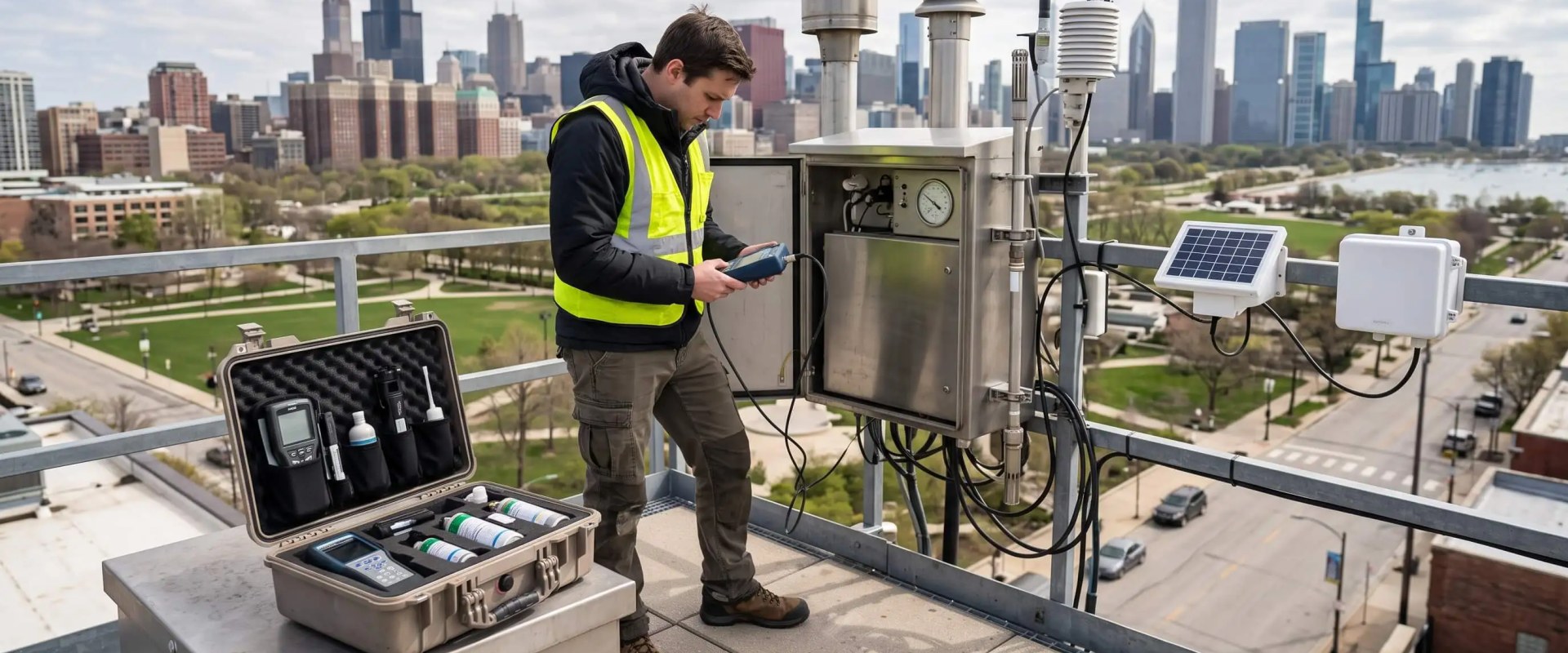
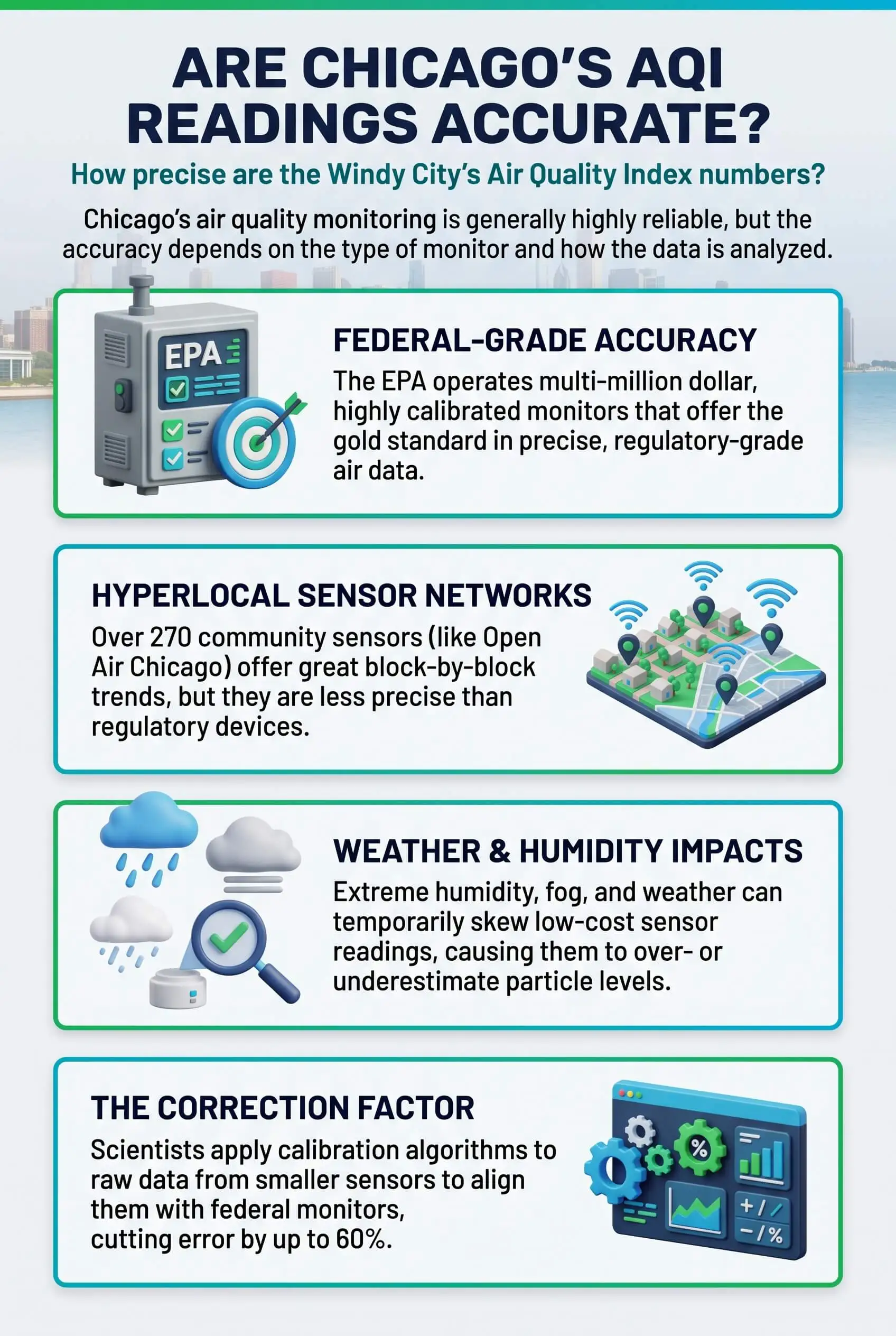
Cook County and Illinois EPA run the regulatory-grade monitors behind the official reading, a 12-site network that tracks particles, ozone, nitrogen oxides, sulfur dioxide, and lead. Because those instruments meet federal standards, their readings carry legal weight.
Timing is the catch. EPA builds particle categories on a 24-hour average, yet AirNow updates the current reading every time a new hour of data comes in. Your morning number and your afternoon number can tell two different stories on the same day.
Why Do Two Apps Show Two Different Chicago AQI Numbers?
NowCast Versus One-Hour Averages
AirNow turns hourly readings into a current AQI with a method called NowCast. It weighs up to the last 12 hours and leans harder on the most recent ones when the air changes quickly. IQAir's AQI+ works from hourly averages instead, so it jumps first when smoke rolls in and drops first when the smoke clears. Nothing is broken when the two disagree. AirNow tells you how bad the air has been lately, and IQAir tells you how bad it is this hour.
Raw Sensors Versus Corrected Sensors
PurpleAir and similar low-cost sensors count particles with a tiny laser. Humid air makes particles swell, and the sensor reads them as bigger than they are. EPA researchers found that raw PurpleAir data runs about 40 percent high, so the agency screens and corrects sensor data before it shows up on the AirNow Fire and Smoke Map. A raw number on your neighbor's dashboard and the corrected dot on that map can land in different color categories.
How Far You Live From the Nearest Monitor
A regulatory monitor reports the air around it. Your block might be different. A home beside the Dan Ryan or the Eisenhower can pick up more traffic pollution than a lakefront block a few miles east, and a breeze off Lake Michigan can shift conditions near the shore within an hour.
The 2024 Rule Change That Shifted Chicago's Color Codes
Here's something that might surprise you: Chicago can log more yellow days even when the air isn't any dirtier. On May 6, 2024, a federal rule lowered the top of the Good range for PM2.5 from 12.0 to 9.0 micrograms per cubic meter. A reading that looked green in 2023 can look yellow today. While the air stayed the same, the yardstick moved, so compare this summer's app history with older years carefully.
Open Air Chicago: What 277 Sensors Can and Can't Tell You
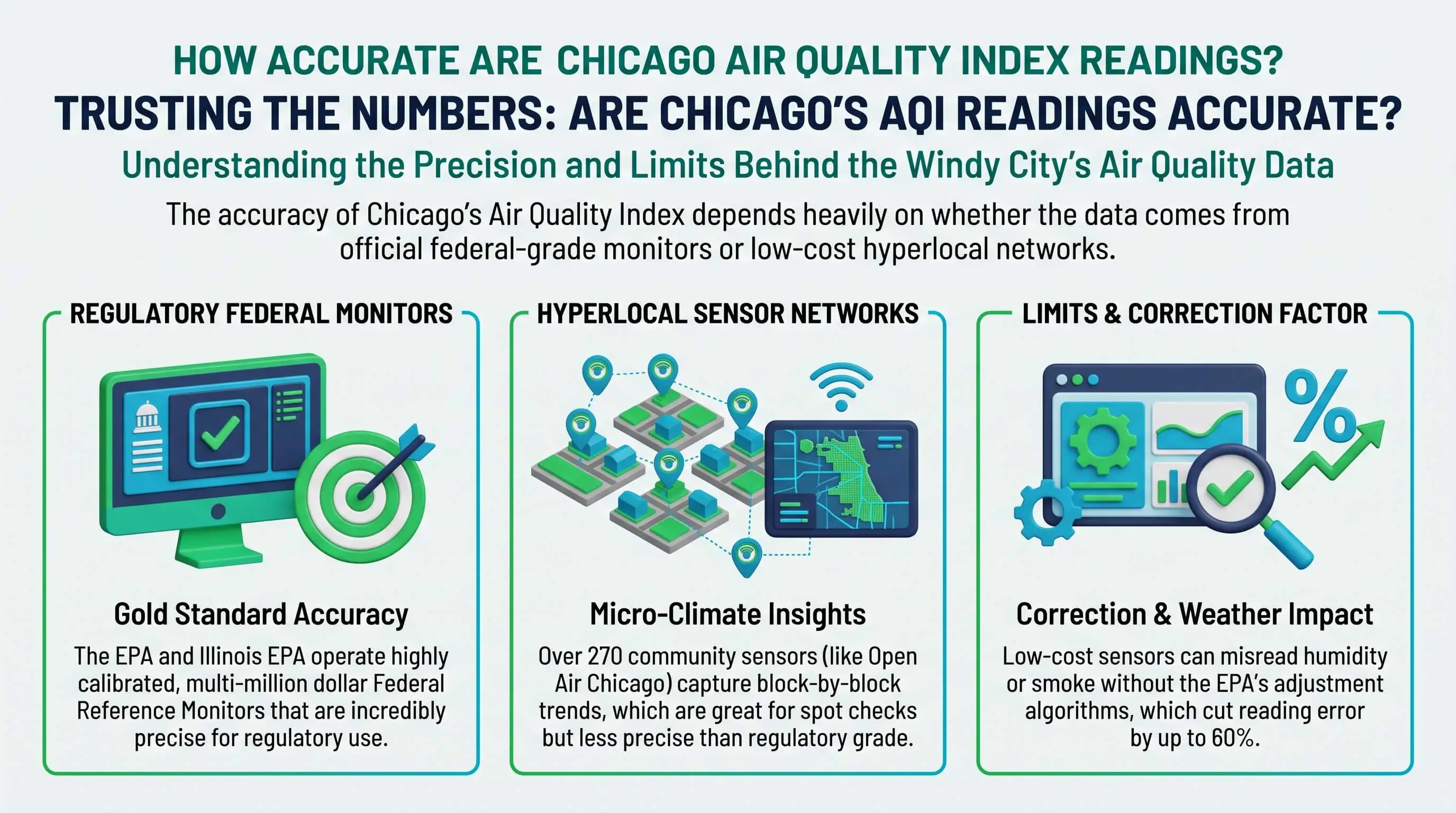
Chicago now has one of the densest air sensor grids in the country. The Chicago Department of Public Health and the UIC School of Public Health installed 277 Open Air Chicago sensors in 2025, and every one of them measures PM2.5 and nitrogen dioxide.
These sensors shine at showing where pollution collects, block by block. Exact concentrations are another matter. The network is non-regulatory, Clarity applies a global correction to its data, and extra units beside federal monitors are helping build a correction specific to Chicago. Compare neighborhoods with Open Air Chicago, then go to the regulatory monitors for the official number.
How to Check a Chicago AQI Reading Before You Trust It
Check the pollutant. Ozone and fine particles call for different moves.
Check the time window. An hourly reading, a NowCast reading, and a daily average aren't interchangeable.
Compare two sources. AirNow gives you the official reading, and the Fire and Smoke Map adds corrected sensor detail.
Watch the trend. Three straight hours of climbing readings matter more than any single number.
Trust your senses in smoke. When you can see haze or smell smoke and the dial still says yellow, act on what you notice.
Why the Outdoor Number Doesn't Describe Your Living Room
Don't take your indoor air for granted when the outdoor number looks fine! Fine particles slip in around windows and doors, while ozone mostly breaks down once it's inside. On a smoky day, close the windows, flip the thermostat fan from Auto to On, and run a MERV 13 filter or the highest rating your system can handle, as EPA recommends. Regular duct cleaning can also help remove accumulated dust and debris from your HVAC system. An indoor monitor will show you whether it's working.
"In my years reading Chicago smoke-day data, I've watched the AirNow dial sit in orange for an hour while the nearest corrected sensor had already turned red. NowCast was doing its math, and the monitor was fine. So I tell families to close the windows when the hourly trend turns, before the dial catches up."
7 Essential Resources
Live Air Quality Index Chicago Map: Real-time Chicago readings with neighborhood detail and tips for cleaner indoor air.
AirNow: Using the Air Quality Index: How current, daily, and forecast AQI differ, and when each one should guide your plans.
Illinois EPA: Outdoor Air: Daily forecasts for 14 Illinois sectors, plus what triggers an Air Pollution Action Day.
Cook County: Air Quality Monitoring: The 12-site regulatory network behind Chicago's official readings.
EPA: Sensor Data on the AirNow Fire and Smoke Map: How EPA checks and corrects low-cost sensor data before it reaches the map.
American Lung Association: State of the Air, Chicago-Naperville: The metro's 2026 grades for ozone and particle pollution.
Federal Register: 2024 Particulate Matter Standards: The rule that tightened the PM2.5 standard and reset the AQI breakpoints.
3 Supporting Statistics
EPA researchers compared nearly 12,000 paired measurements across 16 states and found raw PurpleAir readings overestimated PM2.5 by about 40%. Their correction cut the error from 8 to 3 µg/m³. Atmospheric Measurement Techniques
All 277 Open Air Chicago sensors are non-regulatory, and the city placed additional units at federal monitoring sites to help develop a local correction factor. Data.gov: Open Air Chicago Hour Aggregations
EPA's 2024 rule lowered the annual PM2.5 standard from 12.0 to 9.0 µg/m³ and revised the Air Quality Index, effective May 6, 2024. U.S. Government Accountability Office
Accurate air quality monitoring helps Chicago households better understand pollution levels and make informed decisions about indoor air quality. EPA research highlights the importance of reliable PM2.5 readings, properly calibrated sensors, and updated air quality standards. Alongside monitoring outdoor conditions, choosing the right air conditioning brand can support effective air filtration and help maintain a healthier indoor environment.
Final Thoughts and Opinion
Here's my honest opinion: Chicago's air quality numbers deserve more trust than most people give them, and less certainty than most apps imply. The official monitors get it right, but they average over hours and describe the air around a handful of sites. Sensors fill in the map once someone corrects them. Treat every reading as a measurement with a little wiggle room. When a decision matters, check two sources and follow the trend. Then turn to the part you control, the air inside your home, because that's where you get to be the hero of your household.
Frequently Asked Questions
Is the Chicago AQI on AirNow Accurate?
Yes. Illinois EPA and Cook County run the regulatory-grade monitors behind it. Timing is its main limit, since NowCast averages recent hours and can trail fast-moving smoke.
Why Is IQAir Higher Than AirNow in Chicago?
IQAir uses hourly averages, so it climbs faster when smoke arrives. AirNow weighs up to 12 hours. Once conditions settle, the two usually land close together.
Are PurpleAir Readings in Chicago Reliable?
Corrected readings are. Raw PurpleAir data runs about 40% high, so rely on the corrected values EPA posts on the AirNow Fire and Smoke Map.
Why Does Chicago Show More Yellow Days Since 2024?
In May 2024, EPA lowered the top of the Good range for PM2.5 from 12.0 to 9.0 µg/m³. Readings that once showed green can now show yellow.
Which Chicago AQI Source Should I Check During Wildfire Smoke?
Start with AirNow for the official reading, then open the Fire and Smoke Map for corrected sensor detail near you. When they disagree, follow the worse trend.
Does the Outdoor AQI Tell Me My Indoor Air Quality?
No. The air quality index Chicago monitors report covers outdoor air only. Fine particles still find their way inside, so an indoor monitor and a high-efficiency filter fill in the rest of the picture.
Read Chicago's AQI Like a Measurement, Not a Verdict
Check which pollutant is driving the number, compare AirNow with the corrected sensor map, and act on the trend instead of a single reading. Keep your windows closed and a high quality filter running on smoky days, and the air inside your home will stay cleaner than the number outside.